Anthropic enters the agent infrastructure game
On April 8, 2026, Anthropic announced Managed Agents — a suite of composable APIs for building and deploying cloud-hosted agents at scale. The pitch: go from prototype to production in days instead of months, with sandboxed code execution, session checkpointing, credential management, and scoped permissions handled for you.
This is a significant move. Until now, Anthropic shipped models and a thin SDK. The infrastructure layer — how agents actually run, persist state, and coordinate — was left to developers. Managed Agents changes that equation by offering a first-party orchestration harness that handles the operational complexity of running agents in production.

How the architecture works
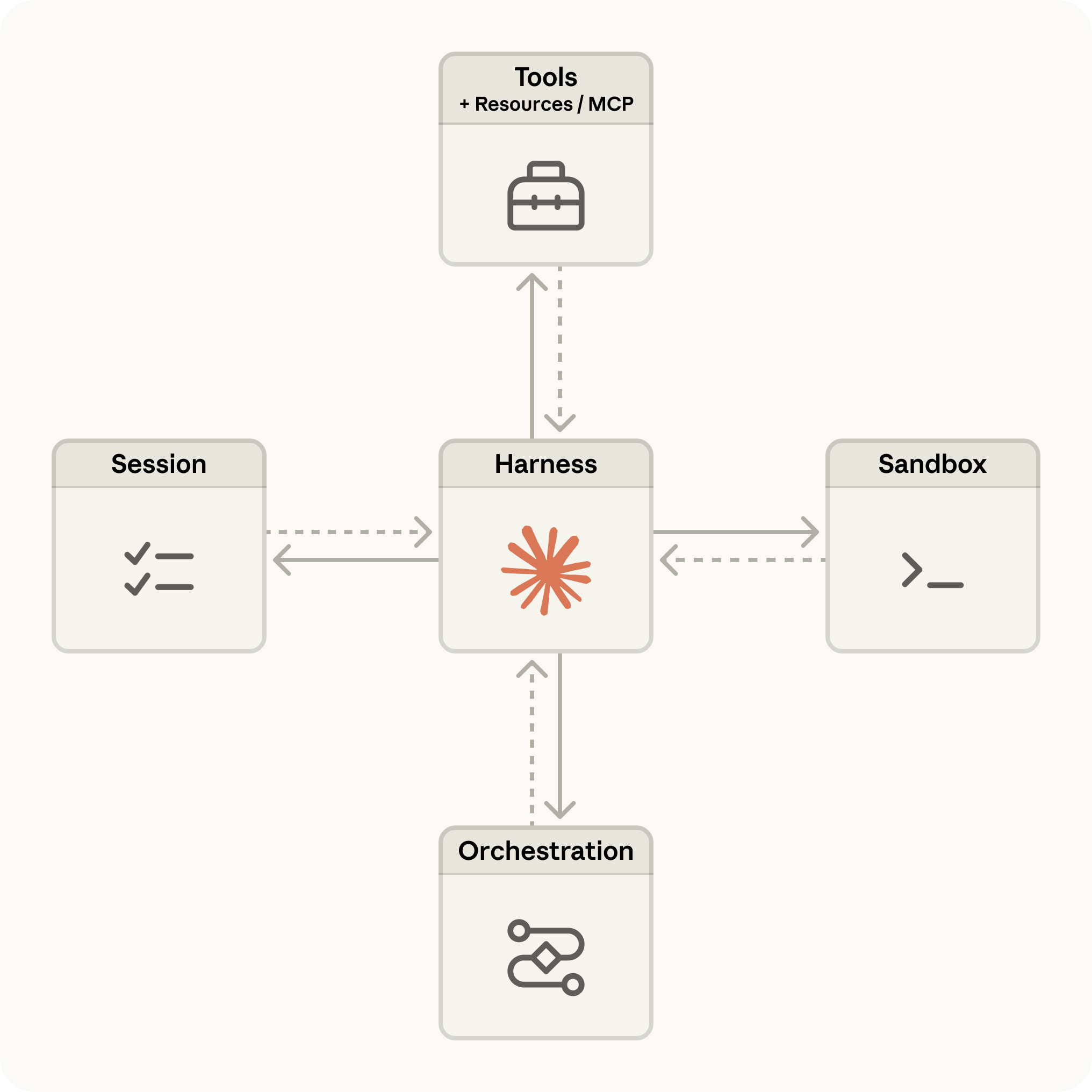
At the center of Managed Agents is what Anthropic calls the orchestration harness. It determines tool calls, manages context, and handles error recovery. The harness connects to four subsystems: Tools and Resources via MCP, sandboxed execution environments, session state management, and multi-agent orchestration.
The key technical claim is that the harness enables Claude to self-evaluate and iterate toward success criteria. In internal testing on structured file generation tasks, Anthropic reports up to 10 points improvement in task success compared to standard prompting loops — with gains concentrated on harder problems.
What teams are building with it
Anthropic highlighted five early adopters that demonstrate the range of use cases. These production deployments show Managed Agents is not just a prototype toy — it is shipping in real enterprise environments.
- Notion uses Managed Agents to delegate work directly within user workspaces, executing tasks in parallel across documents and databases.
- Rakuten deployed enterprise agents across multiple departments within a single week — a timeline that would have been months with custom infrastructure.
- Asana integrated AI Teammates that work alongside humans in project workflows, blurring the line between agent and collaborator.
- Vibecode powers AI-native app deployment, using agents to handle the full development-to-deploy pipeline.
- Sentry pairs automated debugging with patch generation, opening pull requests directly from error traces.
Cloud agents vs. local agents: complementary, not competing
At first glance, Managed Agents might seem to compete with local-first agent tools like Onevium. But the reality is more nuanced. Cloud-hosted agents excel at scale-out tasks: processing thousands of items in parallel, running long autonomous sessions without a developer present, and coordinating multi-agent workflows across distributed infrastructure.
Local agents excel at different things: real-time interactive development, direct access to your file system and running processes, browser automation on your actual machine, and the kind of tight feedback loop where you see every tool call as it happens. A scheduled task that reviews your PRs every morning is better run locally where it has access to your Git repos. A batch processing pipeline that generates thousands of reports is better run in the cloud.
The smart approach is to use both. Managed Agents handles the headless, high-scale workloads. Your local agent handles the interactive, context-rich development work. The model is the same Claude — the execution environment is what differs.
What to watch for
Managed Agents is in public beta, and several aspects are worth tracking as it matures.
- Multi-agent coordination is still in research preview. The promise of agents directing other agents is compelling, but the reliability and debugging story for multi-agent systems remains an open question.
- Pricing has not been disclosed. For teams doing high-volume agent work, the cost model will determine whether Managed Agents is practical at scale or limited to high-value tasks.
- Session tracing and execution inspection are available in the Claude Console. How deep this observability goes — and whether it integrates with existing monitoring stacks — will matter for production adoption.
- The governance model (scoped permissions, identity management, audit trails) addresses a real enterprise need. But the details of how fine-grained these controls are will determine whether security teams sign off on production deployment.
The takeaway
Managed Agents is Anthropic's clearest signal yet that they see agents as a platform, not just a model capability. By shipping production-grade infrastructure — sandboxing, checkpointing, orchestration, governance — they are lowering the barrier for teams that want agents in production but cannot justify building the operational layer from scratch.
For Onevium users, this is additive. Your local agent workflows — interactive coding sessions, browser automation, scheduled tasks, team channel bots — remain the fastest path for development work that needs your local environment. Managed Agents opens the door for the complementary use cases: headless batch processing, always-on autonomous agents, and enterprise-scale deployments where cloud infrastructure is the right choice.